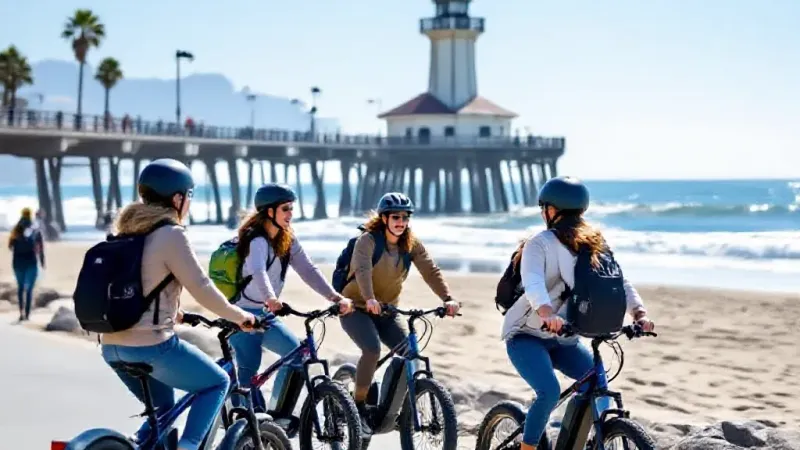
A fatal incident in Lake Forest and a pedestrian injury in Newport Beach have underscored the escalating dangers associated with young riders on electric bikes and motorcycles, leading to renewed calls for parental responsibility within the community.
In April, an 81-year-old Vietnam veteran and substitute teacher, Ed Ashman, died after being struck near El Toro High School in Lake Forest. Prosecutors say a 14-year-old riding a high-powered electric motorcycle, who had reportedly been doing wheelies, hit Ashman. The rider's mother was subsequently charged with involuntary manslaughter.
This tragedy follows an incident in Newport Beach where a journalist was knocked down on a public sidewalk by a group of about seven students from Corona del Mar High School, who were riding e-bikes. The journalist, who sustained a minor injury to his left shoulder and was treated at urgent care, reported that the riders looked back, laughed, mocked him, and one even performed a wheelie near him before riding away.
These incidents reflect a broader, alarming trend. A national study of U.S. emergency departments estimated 45,845 e-bike-related injuries between 2013 and 2022. The estimated number of injuries increased significantly from 2,171 in 2019 to 23,749 in 2022, with 10.9% of injured patients requiring hospitalization. For youth in middle-school and high-school age groups, the head was identified as the most commonly injured body part.
California is experiencing a similar surge in incidents. A 2026 UC San Diego study found that reported California e-bike injury collisions rose sharply from just two in 2018 to more than 1,500 in 2024. Researchers also noted that injured e-bike riders were more likely than traditional bicyclists to be children 14 and younger and to suffer moderate-to-severe injuries.
In response to these growing concerns, Newport Beach has enacted new city rules, effective January 2026. These regulations require riders of e-bikes and other motorized devices to travel at reasonable speeds, yield to pedestrians, and utilize bicycle lanes where mandated. The ordinance specifically outlaws dangerous behaviors such as weaving through pedestrians, distracted riding, and performing wheelies.
While ordinances, increased police enforcement, school safety classes, and improved bike lanes can all contribute to safety, journalist John Szabo emphasizes that none can replace the impact of parental guidance. Szabo, drawing from his own experience, argues that parents who purchase powerful electric vehicles for their children bear a significant responsibility to understand the machine's capabilities and monitor how their child uses it. He states that when safety rules are ignored, there should be consequences, including potentially taking the bike away.
Szabo concludes that while e-bikes offer independence for teenagers, "independence without responsibility can lead to disaster for both the rider and the pedestrian." He stresses that the most important e-bike safety lesson will not come from authorities or school assemblies, but must happen "at the kitchen table," before a child ever leaves the driveway, noting that the next pedestrian knocked to the pavement may not get back up.