
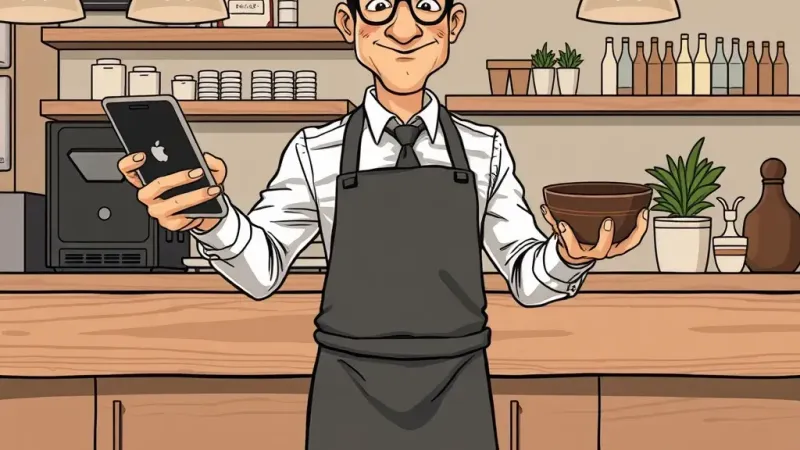
In a stunning leap forward for modern commerce, local coffee shop founder Brandon Sardi has bravely decided to stop charging set prices for beverages and instead let the agonizing social anxiety of total strangers carry the weight of his entire business model.
Sardi, the mastermind behind the recent pop-up series titled 'Who Gives a Hand,' reportedly generated nine hundred and fifty-seven dollars over the course of three grueling hours by simply putting a tip jar on the counter and waiting for people to sweat through their winter coats. Rather than utilizing archaic capitalist mechanisms like price tags, cost analysis, or the exchange of goods for a fixed monetary value, Sardi pioneered a revolutionary new framework known mathematically as 'making people feel like absolute garbage until they hand over a twenty-dollar bill.'
'We wanted to see what would happen if we completely stripped away the cold, transactional nature of buying a burnt oat-milk macchiato and replaced it with a profound, soul-crushing fear of being perceived as cheap,' Sardi explained to reporters while adjusting his vintage beanie. 'When a customer steps up to the register and realizes there is no menu price, a deeply sacred transformation occurs. They aren't just buying a coffee anymore. They are standing trial for the entirety of their moral character in front of an exhausted nineteen-year-old barista.'
According to industry insiders, the pop-up model represents a seismic shift in how small businesses can leverage untreated psychological distress for viral marketing. Instead of traditional advertising campaigns, Sardi simply relies on the universal human terror of the Square reader's preset tip screen, amplified to its absolute breaking point by the total absence of a baseline. When presented with the blank digital canvas, patrons reportedly experienced immediate existential panic, forced to rapidly calculate their net worth, political affiliations, and proximity to the cashier before frantically tapping the highest percentage option just to avoid eye contact.
The genius of the model doesn't stop at the point of sale. In a move that has been universally praised by corporate consultants and sociopaths alike, Sardi immediately funneled every single dollar collected during the three-hour experiment directly into another local small business. This brilliant maneuver transformed a basic economic transaction into a closed-loop ecosystem of mutual aid theater, allowing everyone involved to feel like they had single-handedly solved systemic poverty while drinking lukewarm drip coffee out of a compostable cup.
'It is incredible what you can achieve when you remove the friction of commerce and replace it with pure, unfiltered emotional manipulation,' noted local retail analyst Marcus Vance. 'Why bother setting prices when you can just weaponize the social contract? If this scales nationally, we could see entire supply chains operating exclusively on passive-aggressive sighing and the desperate need to look generous in front of your second date.'
Economic theorists are already rushing to study the implications of Sardi’s disruptive pop-up. Several venture capitalists have reportedly begun drafting proposals to apply the pay-what-you-want framework to vital infrastructure, including public transit, emergency room visits, and residential housing markets. Early focus groups suggest that letting tenants decide what their cramped one-bedroom apartment is worth based entirely on how much they love exposed brick could completely revitalize the real estate sector, provided landlords are willing to starve to death while waiting for a decent tip.
Meanwhile, Sardi is already planning his next disruptive pop-up event, which will reportedly feature a pricing structure entirely dependent on how loudly a customer sighs when they see the tip jar. The future of American retail is bright, provided you are willing to abandon all dignity for a mediocre cup of joe.