San Clemente voters will decide this November on a 1% sales tax increase, a citizen-led initiative designed to create a designated funding source for coastal projects like sand placement and wildfire prevention. This measure requires only a simple majority vote to pass. The city previously attempted a similar sales tax increase last year for sand, which narrowly failed with 64.62% "yes" votes, falling short of the 66.7% needed for earmarked funds.
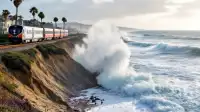
City leaders have spent several years addressing coastal erosion and the shrinking coastline, a problem that has led to multiple closures for the rail line running along the coast and raised concerns about the city itself. San Clemente aims to take the lead in saving its coastline to maintain its identity as a beach town with a thriving tourism industry.
During their September 1 City Council meeting, city leaders discussed their Coastal Strategic Plan, detailing a comprehensive effort to bring sand back to the beaches in both the short and long term. Leslea Meyerhoff, the city’s coastal administrator, articulated a vision for a 250-feet-wide beach, allowing residents to walk its entire length at any time of day.
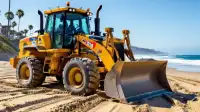
The city's efforts include a partnership with the U.S. Army Corps of Engineers, which is expected to deliver two million cubic yards of sand to San Clemente beaches over the next 50 years. This sand will be dumped in 250,000-cubic-yard batches every five to six years, with costs shared among the city, federal, and state governments. Additionally, the San Diego Association of Governments (SANDAG) is working on a project to widen beaches along the Southern California coastline, including San Clemente, with sand potentially arriving around 2030. The city's offshore sand source investigation is also progressing, with a draft report anticipated by the end of this year. San Clemente also holds a Sand Compatibility and Opportunistic Use Program (SCOUP) permit, valid for 10 years, allowing the addition of up to 300,000 cubic yards of sand annually, provided sources and funding are available to supplement larger projects. The city also conducts a regional shoreline monitoring program to optimize sand longevity.
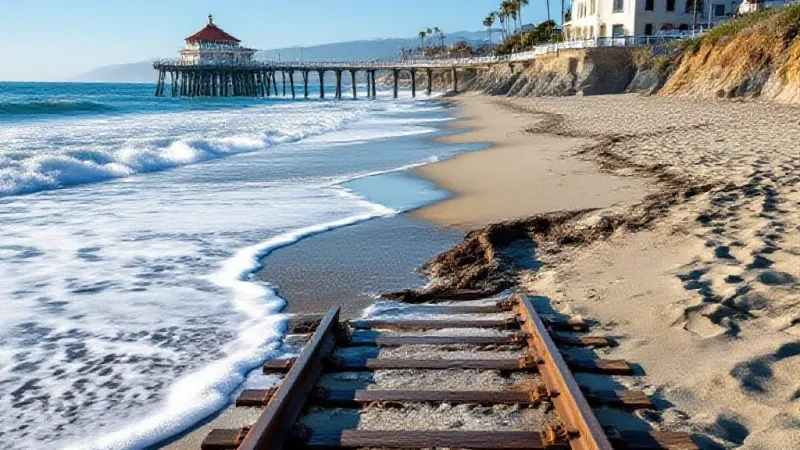
Despite these plans, city leaders indicate a current lack of sufficient funding to fully implement many of these efforts. Councilmember Victor Cabral emphasized that "some people don’t understand the real crisis we’re in" during the meeting, presenting an image of beaches near Cotton's Point with virtually no sand between the train tracks and the ocean. Cabral warned, "This is what our future is unless we put sand in," stating that this applies to the entire 8 miles of San Clemente beaches. He also criticized the county transportation authority for dumping rocks to protect the train tracks, acknowledging their responsibility but underscoring the city's role in saving the beaches.
In a related action, council members voted to accept a $2 million grant from the State Coastal Conservancy. This funding will support the city’s sand retention pilot project, which could involve constructing offshore breakwaters to help disperse wave energy. Councilmember Zhen Wu clarified that "At this moment, we’re not deciding to build it," noting it was "free money from the state."
Meanwhile, the Orange County Transportation Authority (OCTA) discussed its own solutions to protect the 7-mile stretch of railway through San Clemente during an August 24 meeting. The railway is imperiled by eroding beaches, landslides, and wave activity, with tracks sometimes less than 200 feet from the water line, leading to waves crashing onto the tracks during high tide. Darrell Johnson, OCTA Chief Executive Officer, stated that their ongoing study aims to protect the railway for 30 years, marking a shift from emergency responses to a more proactive approach. Jamey Federico, OCTA Chair and Dana Point City Councilmember, commented that "If not for the train tracks, this would be someone else’s coastal resiliency problem."
OCTA plans to place approximately 560,000 cubic yards of sand onto San Clemente’s shoreline to protect the railway, a project expected to be completed by Fall 2028 after necessary permits and approvals. Eric Carpenter, an OCTA spokesman, explained that a wider beach provides a natural buffer against crashing waves, but acknowledged that sand moves naturally and might not be sufficient alone. He stated that engineered protection, such as boulders, riprap, engineered rock revetments, or seawalls, may also be necessary in the most vulnerable locations.
OC Supervisor and OCTA board member Katrina Foley expressed frustration over the permitting process for sand placement, noting that "We need to be depositing sand now." She indicated that under current proposals, sand placement might not begin for another two years, which "does not address the sense of urgency." Foley also urged transportation officials to coordinate with San Clemente to streamline the permitting process. Federico commented that OCTA needs to be strong partners in coastal resiliency efforts, as these actions also aid in protecting the railway. He added that cities like Huntington Beach and Newport Beach have taken steps to address these issues, suggesting San Clemente is "woefully behind" but working diligently.