San Juan Capistrano’s City Council voted 4-1 earlier this month to move forward with plans to implement license plate reader (LPR) cameras for downtown parking enforcement. The decision to use the surveillance technology comes amid increasing scrutiny of LPR systems across Orange County and nationwide regarding privacy and surveillance concerns. Councilmember Sergio Farias cast the sole dissenting vote against the measure, which was approved at the Sept. 1 meeting.
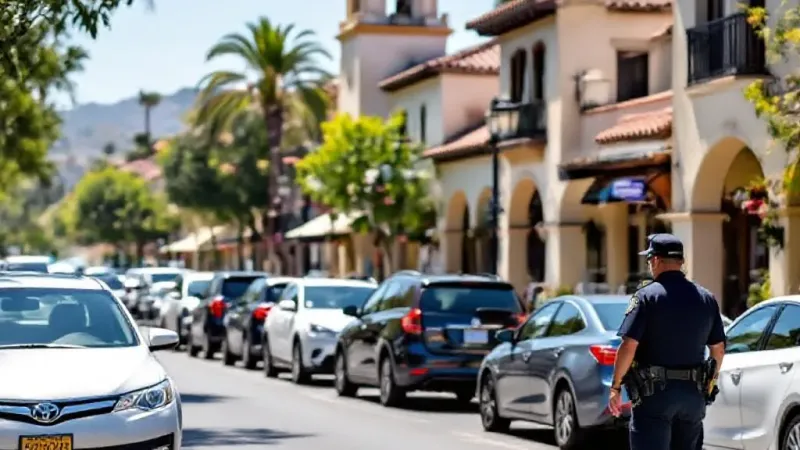
The proposed system would involve cameras mounted on parking enforcement vehicles, designed to scan license plates and automatically determine if vehicles are complying with downtown parking regulations. This includes adherence to time limits, payment for parking, and restrictions for employee permits. The initiative is part of a larger downtown parking program that also includes the addition of new parking enforcement positions, modifications to existing parking time limits, and overall improvements to downtown access.
Julie Dixon, president and founder of Dixon Resources Unlimited, presented the implementation plan to the council. She highlighted that the LPR cameras would enable the city to enforce parking rules with greater consistency. Dixon explained that the system allows officers to check a vehicle's eligibility without manual examination, with the license plate serving as its “credential.” She also described a process called “virtual chalking,” where the program digitally marks a vehicle and can track how long it remains parked without moving. Beyond enforcement, the technology is also intended to gather parking data, such as occupancy and usage rates, to provide city leaders with a clearer understanding of downtown parking patterns. Dixon indicated that while the technology could reduce the time parking officers spend on manual checks, enforcement staff would still be necessary. According to a city staff presentation, the next step involves issuing a formal request for proposals from various technology providers for the council's review before the plan is implemented.
During the council's discussion, members voiced concerns about privacy and the overall impact of the new technology. Councilmember Howard Hart questioned the actual benefit to residents, asking, “Who is this serving? Who is this making it easier to park downtown?” He also wondered if the technology would truly make a “difference on the macro-level,” despite ultimately voting in favor of installing the cameras in the downtown area. Councilmember Farias specifically raised concerns about potential privacy or legal issues, particularly if cameras captured license plates of individuals not violating parking rules. He questioned the City Attorney on whether the setup would prevent lawsuits. City Attorney Jeffrey Ballinger responded that many lawsuits involving LPR technology have focused on broader applications than simple parking enforcement, and he felt comfortable with this specific use from a legal standpoint. Dixon also affirmed that the city’s use of LPR for parking policies would be “dictated and informed and published.”
The expansion of LPR technology in San Juan Capistrano builds on existing infrastructure; the city council approved the purchase and installation of 10 Flock cameras in 2022, followed by another 10 in 2023. This brings the total to 20 Flock cameras currently operating at city parks, various facilities, and traffic signals.
Across Orange County, license plate recognition technology has drawn significant scrutiny, primarily concerning privacy, data collection, and access to recorded information. Costa Mesa, which utilizes 46 Flock automated license plate readers, recently faced public calls to remove its cameras after a former police officer was found to have used the system to stalk women and romantic rivals. This incident prompted residents to question the methods of data collection and storage, as well as who has access to such sensitive information. Despite these concerns, the Costa Mesa City Council voted in July to retain its contract with Flock, while directing staff to negotiate stricter terms and rules governing system access. Other cities in the region have also moved to expand their LPR use; Orange renewed a Flock contract valued at over $350,000 earlier this year, and Anaheim approved $735,000 for the addition of 72 license plate readers.
Councilmember Hart reiterated his skepticism during the Sept. 1 meeting, stating he doubted license plate recognition would significantly address the city’s broader parking problems, despite his vote.